
Carroll County Criminal Court Cases
Carroll County criminal court cases are divided by jurisdiction. Superior Court has exclusive felony-trial jurisdiction. The district attorney may file an accusation or seek a grand-jury indictment, and the Clerk of Superior and State Courts keeps the resulting file. State Court hears misdemeanors, traffic offenses, and county ordinance cases. Magistrate Court issues arrest and search warrants and handles initial matters, but its warrant file is not the same as a later prosecution docket.
The clerk's criminal divisions are at 311 Newnan Street in Carrollton. Superior Court is on the third floor, with a published line of 770-830-5871. State Court uses Courtrooms A and B, with separate published numbers. The shared clerk number is 770-830-5830, Monday through Friday from 8 a.m. to 5 p.m. That office is the source when an online result lacks a pleading, judgment, or certified disposition.
Carroll Courts by Filed Charge
The charging document points to the right Carroll County court. Georgia does not number felony classes. A felony is punishable by death, life, or more than twelve months, and Superior Court tries it. State Court generally handles misdemeanors, including high and aggravated misdemeanors. A city citation may remain in municipal court.
| Court | Typical record | Contact |
|---|---|---|
| Superior Court | Felony accusation or indictment | 770-830-5871 |
| State Court | Misdemeanor, traffic, ordinance | A: 678-390-6208; B: 678-390-6230 |
| Magistrate Court | Arrest/search warrant and initial matter | 770-830-5874 |
The Georgia jurisdiction overview helps distinguish these levels. A booking label is preliminary. Use the filed accusation or indictment to learn what charge the prosecutor pursued.
Searching Carroll County Case Records
The primary online route is the clerk-linked Tyler Courts Case Management Web Search. Its landing page offers a guest path and account choices. Deeper query and detail controls were not fully verified, so do not assume every document can be downloaded free. Use a case number when known, or test a full name and confirm court, filing date, and counts before treating a result as a match.
| Verified control | Type | Required? | Limit |
|---|---|---|---|
| Continue as Guest | Access choice | No account | Detail fields may change |
| Account sign-in | Access choice | No for guest route | Does not promise documents |
| Case detail | Dynamic result | After a match | Confirm live labels |
- Open Tyler from the official clerk site and continue as a guest.
- Search with the strongest identifier, preferably a case number.
- Confirm Superior or State Court and compare dates and counts.
- Read each docket event and disposition separately.
- Ask the clerk for a plain or certified copy when the filing is not online.
Georgia has no comprehensive statewide criminal-case index. The E-Access directory routes users court by court.
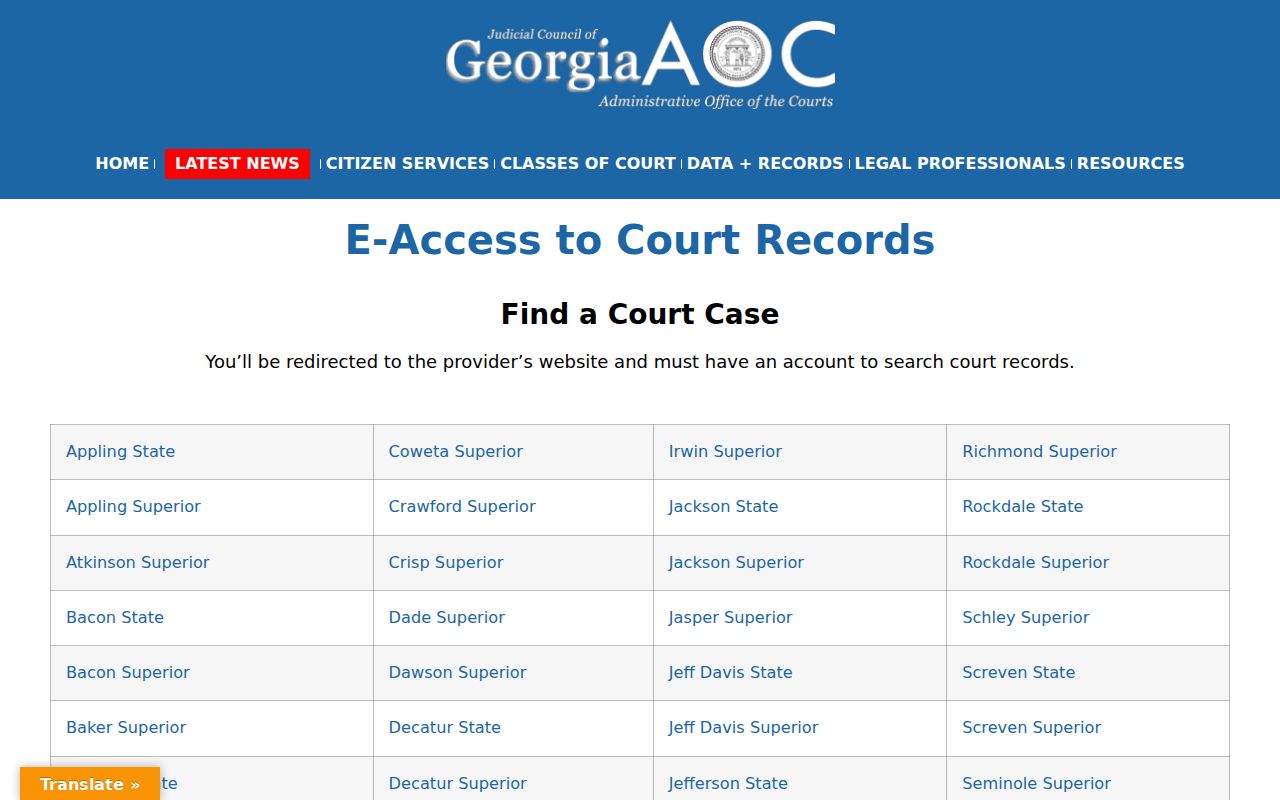
For Carroll filings, return to Tyler or the clerk's records counter.
Carroll Court Documents Offline
An online event may show that a filing exists without supplying its image. Contact the clerk's criminal division with the case number, defendant name, court, and exact document. State whether a plain or certified copy is needed. Research did not establish older-file, search, or certification fees, so confirm cost and delivery before sending payment.
The official division contact source is pictured below.
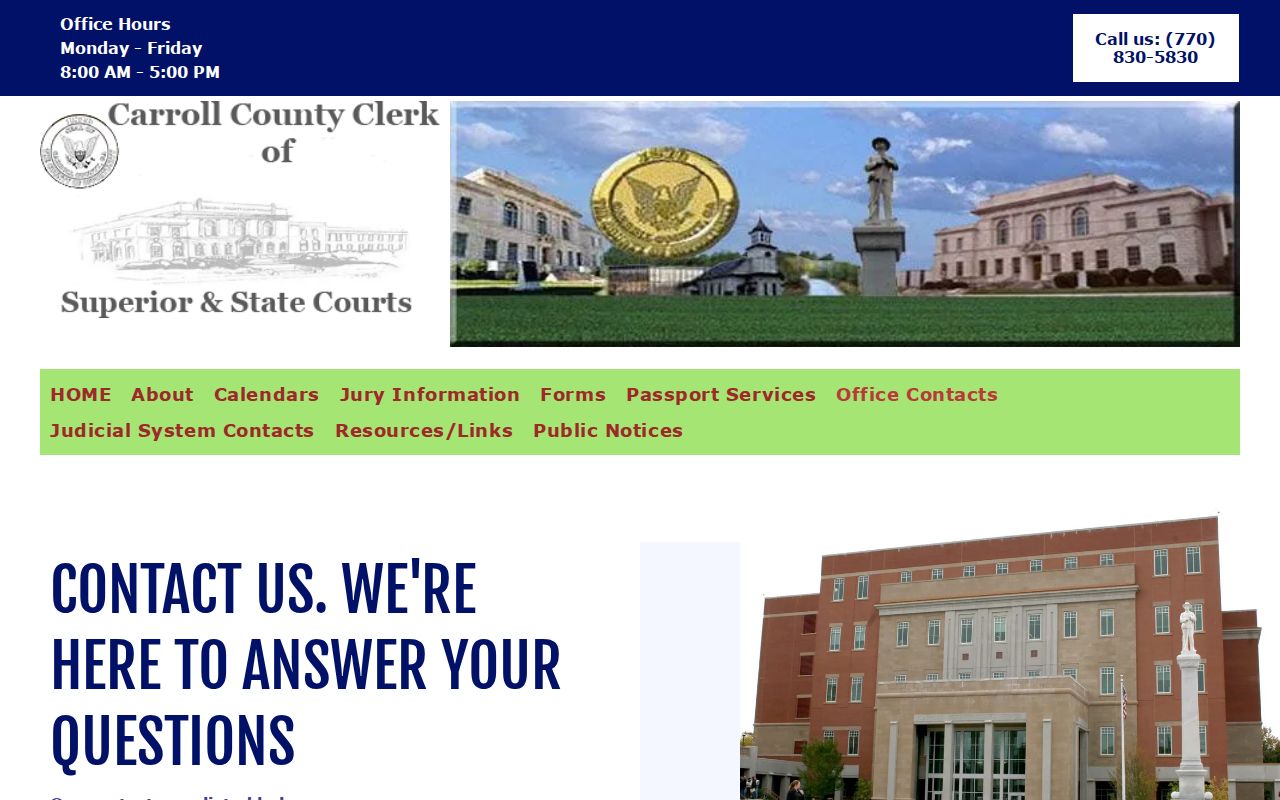
Division-specific contacts reduce the risk of sending a felony request to the wrong desk.
The GAPS fingerprint channel serves fingerprint checks, not court-document orders.
A fingerprint history and a Carroll County case file answer different questions.
Inside a Carroll County Case File
A Carroll County criminal case file traces filed allegations and court action. It can contain an accusation or indictment, party names, charge counts, motions, hearing entries, pleas, judgment, sentence, and financial entries. Availability varies by case and by online view. Read each count separately because one may be dismissed while another ends in a plea or conviction.
| Case number | Unique court identifier for searches and copy requests. |
|---|---|
| Charging document | Accusation or indictment stating filed counts. |
| Case status | Open, pending, closed, or another live label. |
| Events and hearings | Docket entries and scheduled court activity. |
| Disposition | Result of each charge, such as dismissal, acquittal, plea, or conviction. |
| Sentence | The court's ordered punishment and conditions. |
A nolle prosequi means the prosecutor declined to continue a charge. It is not a conviction. An acquittal means not guilty, while dismissal ends the charge without a guilt judgment. A calendar entry is only a setting, not the full docket or judgment.
Carroll Court Calendars Have Limits
The clerk publishes calendars and orders. Calendars help locate a hearing date or courtroom, but they are not complete histories. A name on a calendar does not reveal every filing, each count's result, or whether a later order changed the setting.
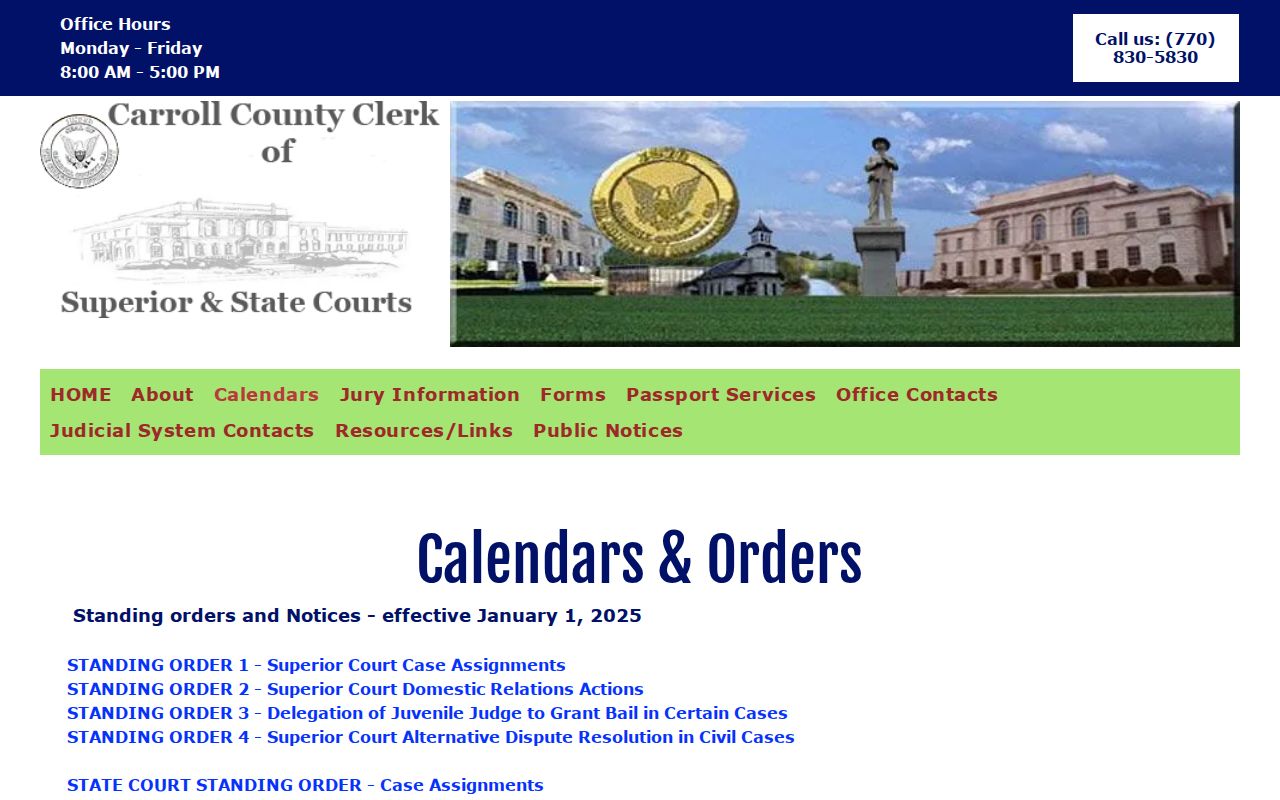
The calendar page supports schedule research, while Tyler and the clerk file provide the fuller trail.
How a Carroll Criminal Case Moves
After arrest and initial appearance, the prosecutor decides whether and how to file. The district attorney may use an accusation or indictment for a felony. The Solicitor-General files misdemeanor accusations. At arraignment, the defendant gives a formal answer, called a plea. Motions address legal or evidence issues before a negotiated plea or trial. Judgment and sentence follow a guilty result, and an appeal may create a separate appellate record.
Case flow: Charges Filed → Arraignment → Pretrial → Plea or Trial → Disposition → Sentencing
The Superior Court location page confirms the felony court's Carrollton setting.
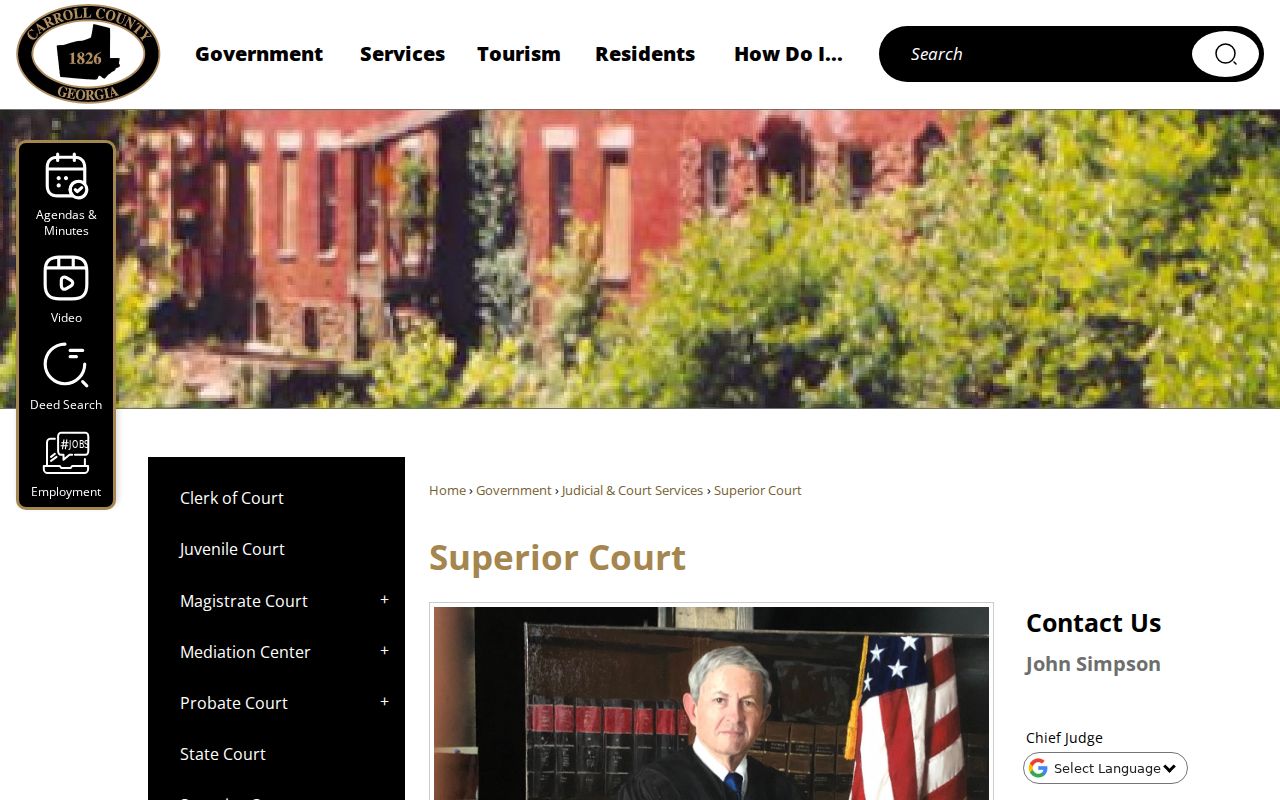
That physical route remains useful when a digital record omits a filed document.
Carroll Court File Versus GCIC
A court search does not replace statewide criminal-history review. The Carroll file gives local pleading and docket depth. GCIC links fingerprint-supported arrest cycles to reported dispositions through a state SID and offense tracking number. Georgia Felon Search exposes only reported in-state felony convictions and omits misdemeanors, non-convictions, juvenile history, restricted records, and successfully completed First Offender records.
After transfer to state custody, the Georgia Department of Corrections becomes another source.
Custody information complements, but does not replace, the Carroll judgment and sentence.
Carroll's West Georgia Circuit Shift
Carroll County moved from the Coweta Judicial Circuit into the West Georgia Judicial Circuit in January 2025. That change matters when reading older captions and prosecutor references. A pre-transition file can carry an older circuit name without belonging to a different county court.
Use the filing date and court named in the caption. The West Georgia Circuit Public Defender is the current official defense-services route. Historical terms should be read in date context, not treated as a docket error.
Case Record Access and Restrictions
Georgia court records are generally open, but access is not absolute. Juvenile files, sealed matters, protected victim information, medical details, and identifiers can be withheld or redacted. An online view may display less than the official file. If a case is missing, verify the court and spelling, then ask whether an older, sealed, or non-digitized record exists.
The Georgia Open Records Act governs many agency records, while courts also apply judicial access and sealing rules. Record restriction under O.C.G.A. § 35-3-37 limits dissemination of eligible arrest-cycle data but does not destroy every record. Court sealing can require separate relief. A restricted GCIC entry therefore does not prove that the Carroll court file vanished.